
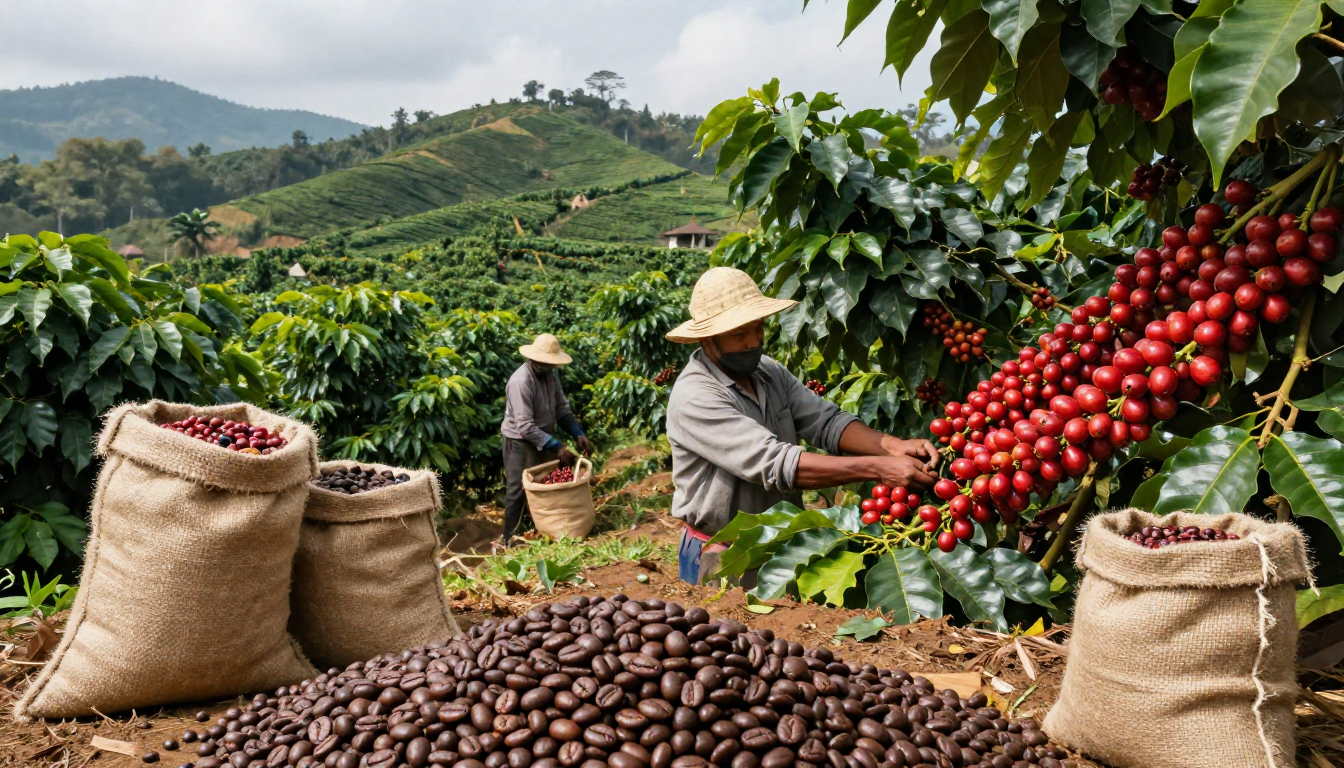
Every cup of coffee begins its journey far from the café counter. Before it becomes a familiar aroma in the morning, coffee starts as a fruit grown in specific climates around the world. Understanding where coffee beans come from helps us appreciate the craft, patience, and people behind every brew.
Coffee Grows on Trees, Not Shelves
Coffee beans are actually seeds found inside coffee cherries. These cherries grow on coffee plants that thrive in tropical regions near the equator. This area is known as the “Coffee Belt,” stretching across Central and South America, Africa, and parts of Asia.
The plants need warm temperatures, steady rainfall, rich soil, and high altitudes. Even small changes in climate can affect the taste of the final cup.
From Flower to Coffee Cherry
The coffee journey starts with delicate white flowers that bloom on coffee trees. After pollination, these flowers develop into green cherries. Over several months, the cherries ripen and turn bright red, signaling they are ready for harvest.
Timing matters. Cherries picked too early or too late can impact flavor, which is why skilled farmers carefully monitor the harvest season.
Harvesting the Beans by Hand
In many coffee-growing regions, beans are still harvested by hand. Farmers selectively pick ripe cherries to ensure quality. This process is labor-intensive but essential for specialty coffee.
Some regions use mechanical harvesting, but hand-picking remains the gold standard for premium beans.
Processing: Where Flavor Begins to Form
Once harvested, coffee cherries must be processed quickly. This is where the bean is separated from the fruit. There are three main methods: washed, natural, and honey processing.
Washed coffees tend to be clean and bright. Natural coffees are fruitier and bolder. Honey-processed coffees sit somewhere in between. Each method shapes the flavor before roasting even begins.
Drying and Sorting
After processing, the beans are dried until they reach the right moisture level. This step is crucial. Too much moisture can cause spoilage, while too little can damage flavor.
Once dried, beans are sorted by size, weight, and quality. Defective beans are removed to maintain consistency.
Traveling Across the World
Green coffee beans are then packed and shipped worldwide. At this stage, they have very little aroma. The real transformation happens once they reach roasters.
Different origins are often blended or roasted separately depending on the desired flavor profile.
Roasting: The Final Transformation
Roasting unlocks the flavors trapped inside the beans. Heat triggers chemical reactions that develop aroma, body, and taste. Light roasts highlight origin characteristics, while darker roasts create bolder, deeper flavors.
Roasting is both science and art. Small changes in temperature or timing can completely alter the cup.
From Origin to Your Cup
By the time coffee reaches your cup, it has passed through countless hands—farmers, processors, exporters, roasters, and baristas. Each step adds character and value to the final experience. Understanding this journey deepens appreciation for quality coffee and the people behind it.
Closing Note
Great coffee starts at origin but comes alive through careful sourcing and roasting. Brands like Wala Coffee focus on honoring this journey by selecting quality beans and preserving their natural character. If you want to explore thoughtfully sourced coffee and learn more about how origin shapes flavor, discovering more from Wala Coffee is a natural next step
